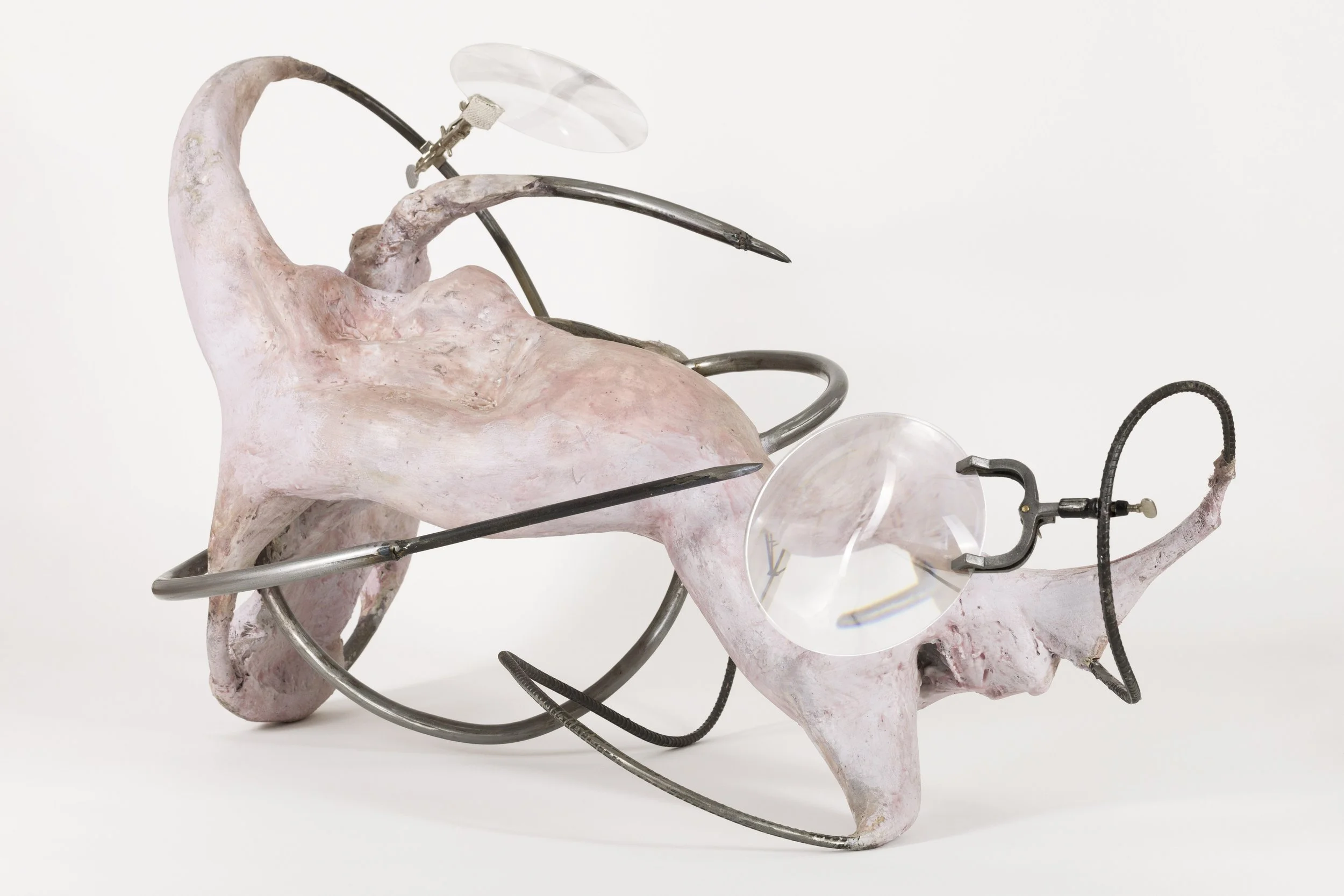
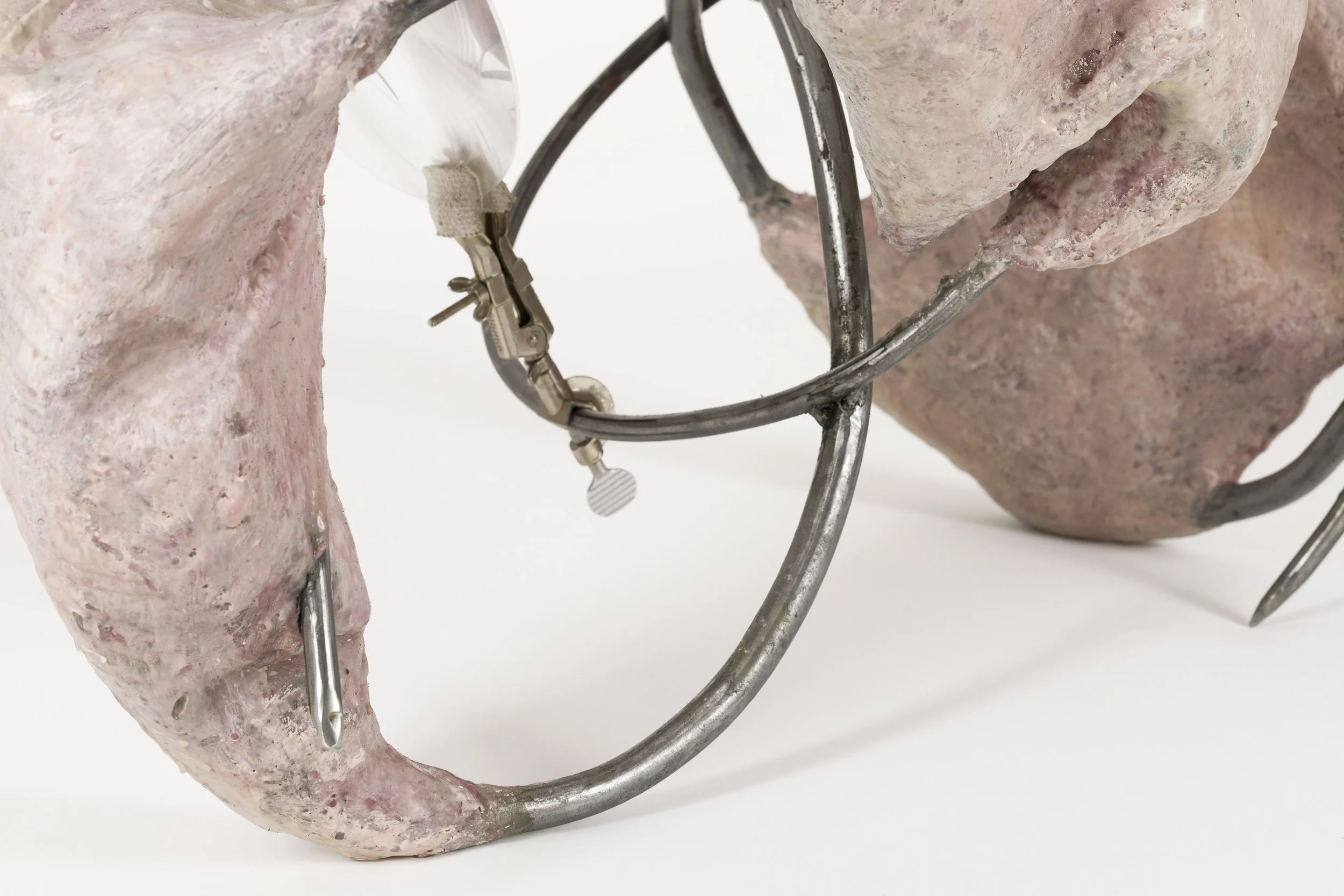
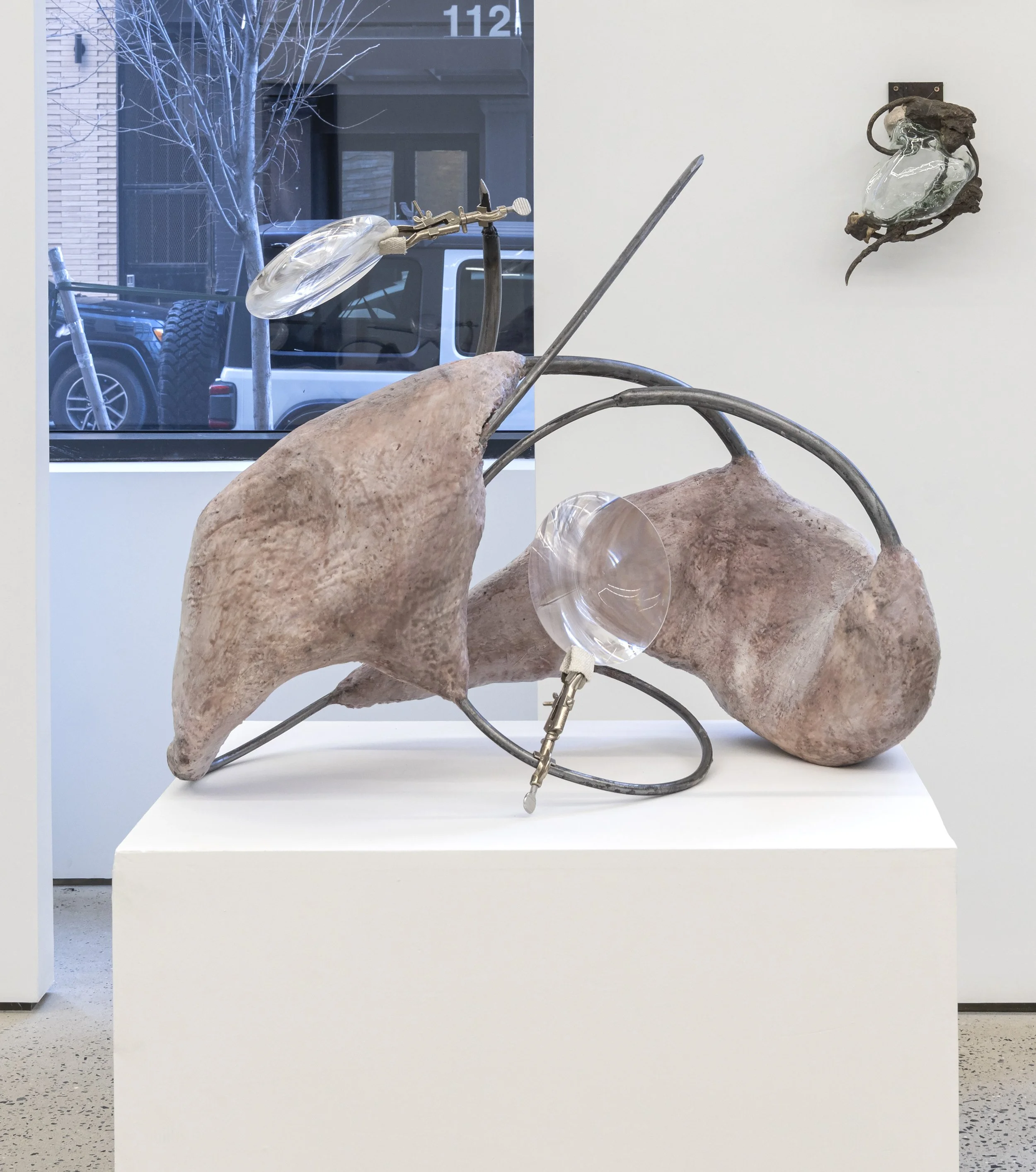
Cada Agujero En El Cuerpo (Every Hole In The Body), 2025, Metal, Resin, Fresnel Lenses, Beeswax, Oil, 24 H x 30 W x 48 D in. / 61 H x 76 W x 122 D cm.
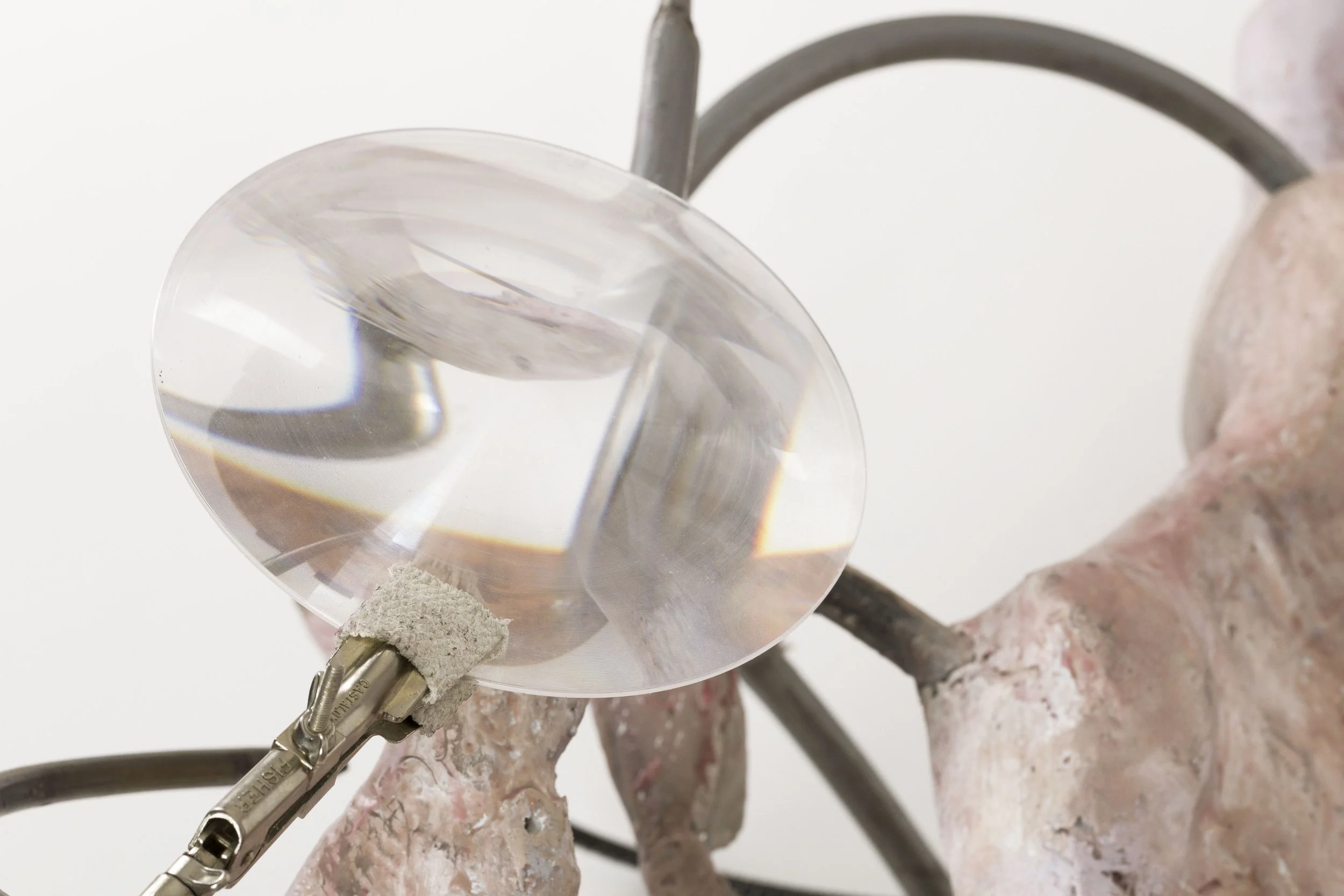
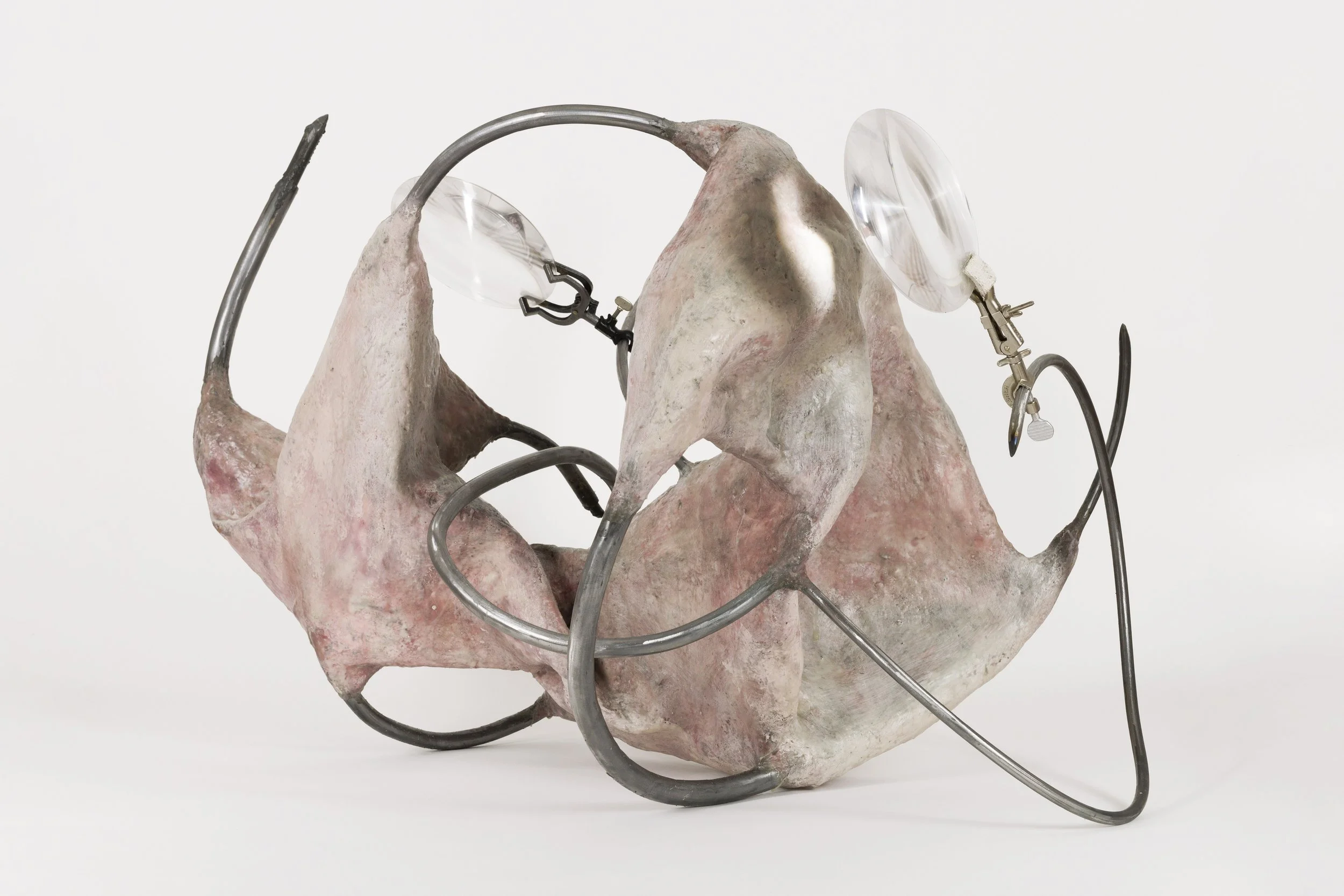
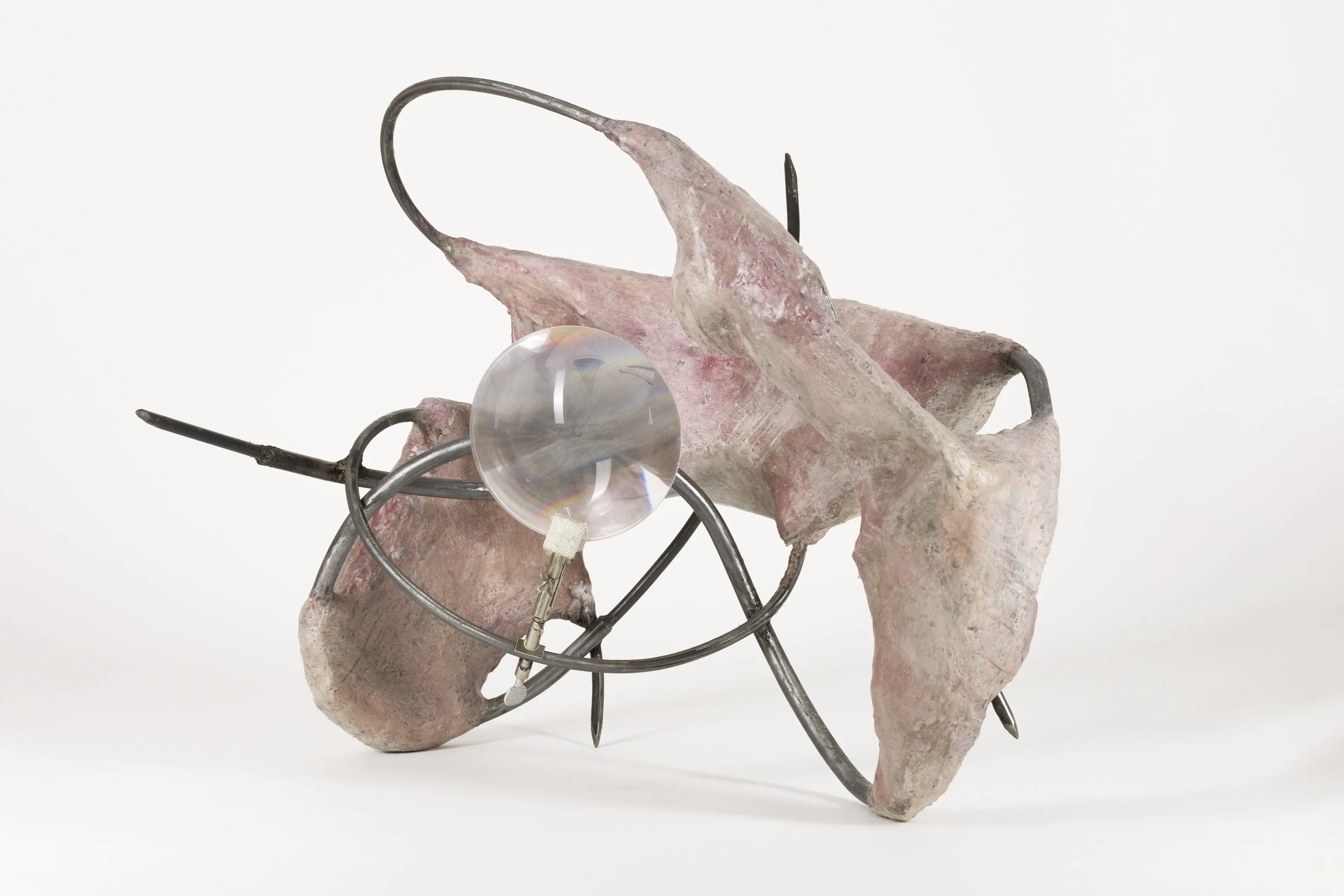
Something Outgrown; An Injured Secret Of Minds I, 2025, Steel, resin, Beeswax, Wire Mesh, Concrete, Paper, Fresnel Lens and Lab Clamps, 51 H x 39 W x 36 D in. / 130 H x 100 D x 90 D cm
Something Outgrown; An Injured Secret Of Minds IV, 2025, Steel, resin, Beeswax, Wire Mesh, Concrete, Paper, Fresnel Lens and Lab Clamps, 51 H x 39 W x 36 D in. / 130 H x 100 D x 90 D cm.
Mixed media
Installation
Something Outgrown explores the cinematic performativity of matter through movement, optical distortion, and the unstable relationship between seeing and being seen. Combining steel, resin, beeswax, wire mesh, concrete, and paper with a Fresnel lens and laboratory clamps, the sculpture brings together optical apparatuses, scientific instruments, and disorganized material forms. Its fleshy surfaces evoke an anatomy that no longer conforms to a coherent organism, suggesting processes of disassembly, deformation, and continuous reconfiguration. Rather than representing a recognizable body, the work stages the instability of the categories through which matter is organized, differentiated, and rendered intelligible.
The incorporation of optical and laboratory devices introduces a tension between the desire to observe, examine, and classify and the impossibility of fully stabilizing what comes into view. Evoking scientific technologies of inspection and intervention, these instruments point toward the operations through which phenomena are rendered legible, distinguishable, and available for knowledge. Yet the sculpture's material configurations resist the very procedures that seek to organize them. The lens promises proximity while simultaneously distorting its object; it mediates access to an interior that remains elusive, suspended between visibility and concealment. Looking becomes an operation that both produces and frustrates knowledge, exposing the limits of the apparatuses through which the world is divided into recognizable forms and meaningful categories.
At the same time, the sculpture operates as a libidinal machine, where scientific inspection converges with voyeurism and desire. Its structures seem to reach toward, encircle, or penetrate its own material body, establishing a circuit of attraction and obstruction in which the observer is implicated. The desire to see inside becomes inseparable from the impulse to cross the limits between interior and exterior, subject and object, organism and environment. Yet there is no stable interior waiting to be revealed, nor any definitive boundary separating the observer from the observed, the instrument from the matter it interrogates, or the human from the nonhuman. Through this entanglement of sculptural matter, optical distortion, and material disorganization, the work proposes a cinematic space in which established distinctions begin to dissolve. Matter emerges not as a passive object of scientific knowledge, but as an unstable field of relations, transformations, and forces that exceeds the categories through which it is made recognizable.