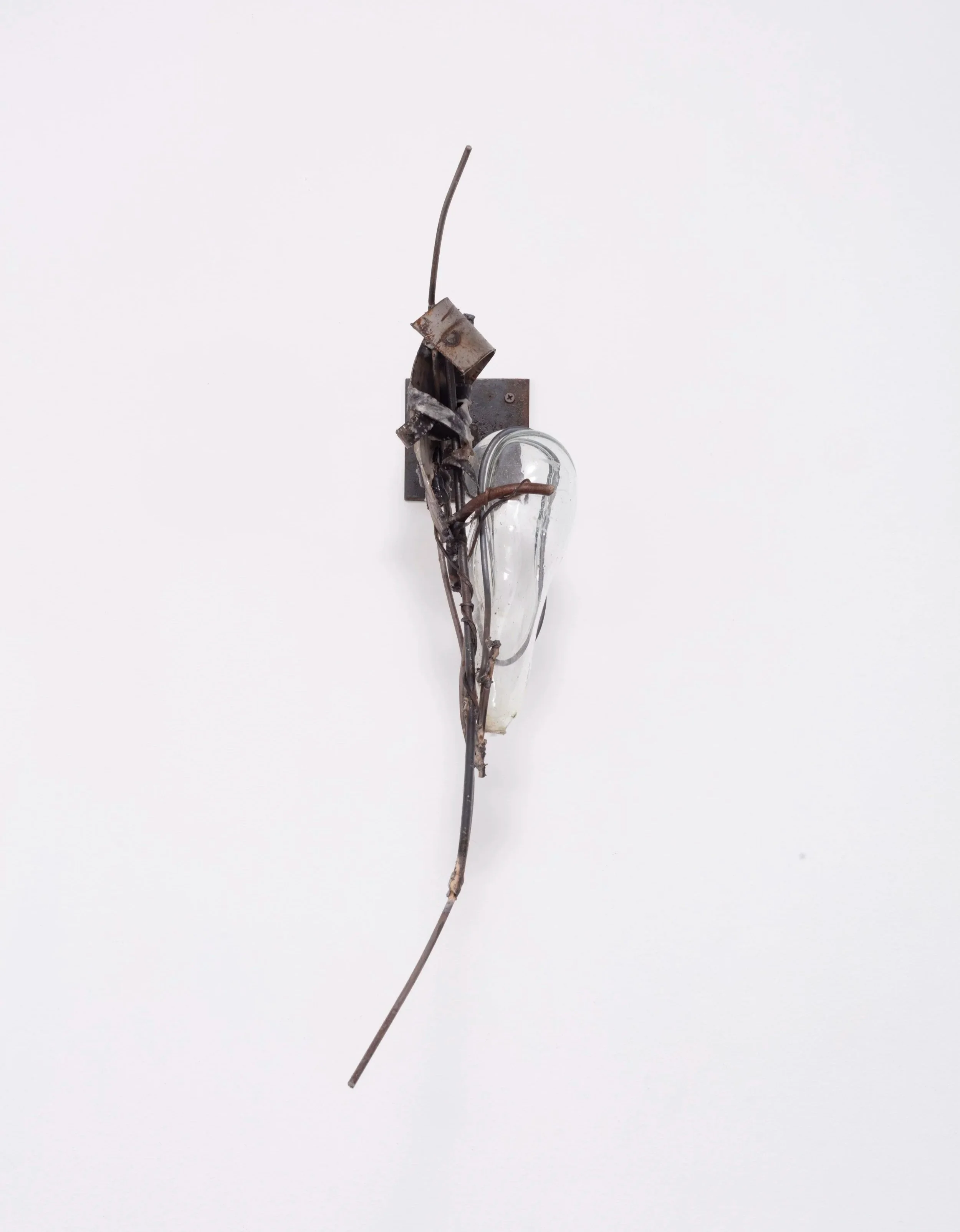
A new fragility, 2026
Blown glass, metal, resin, encaustic
26 x 6 x 18 in.
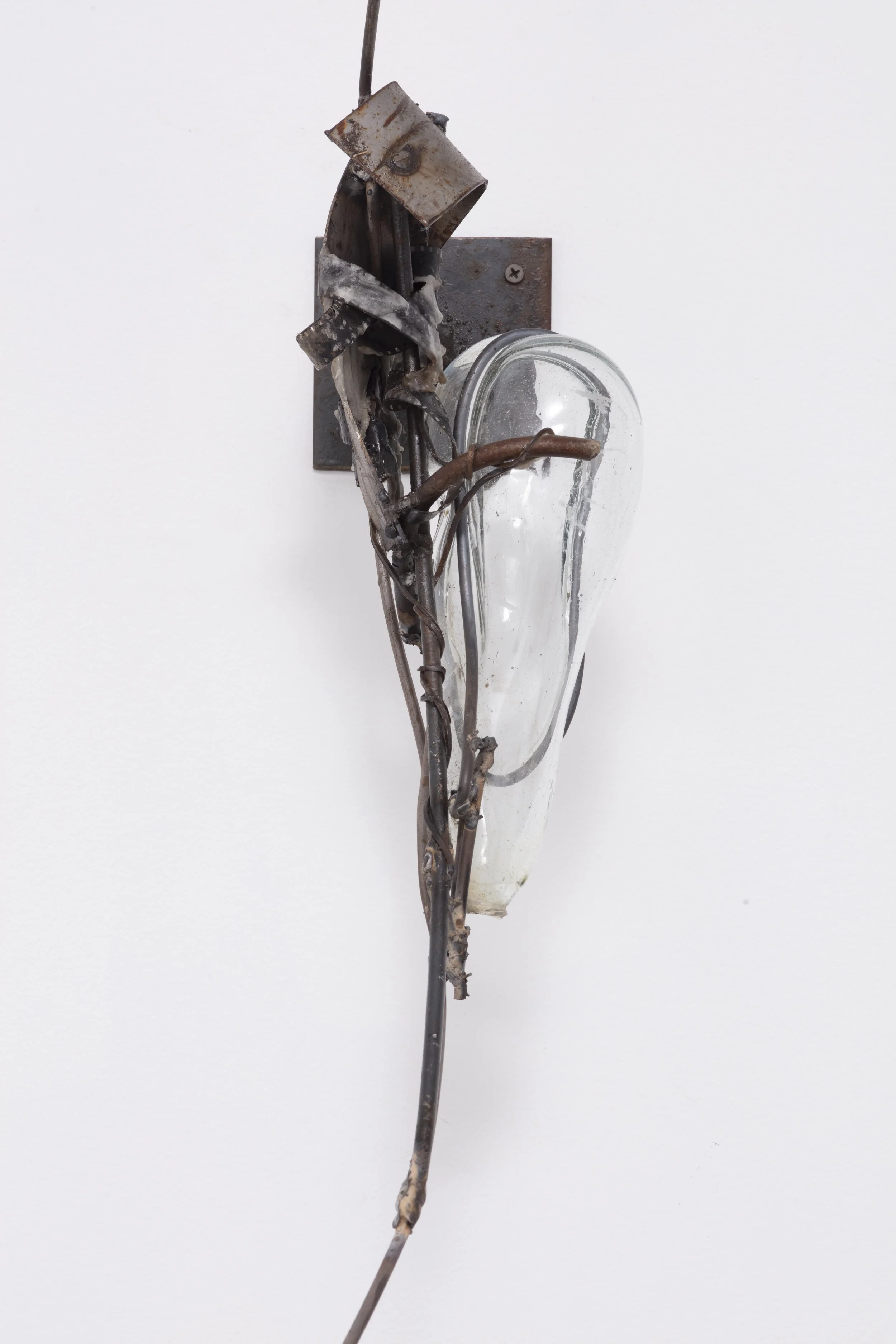
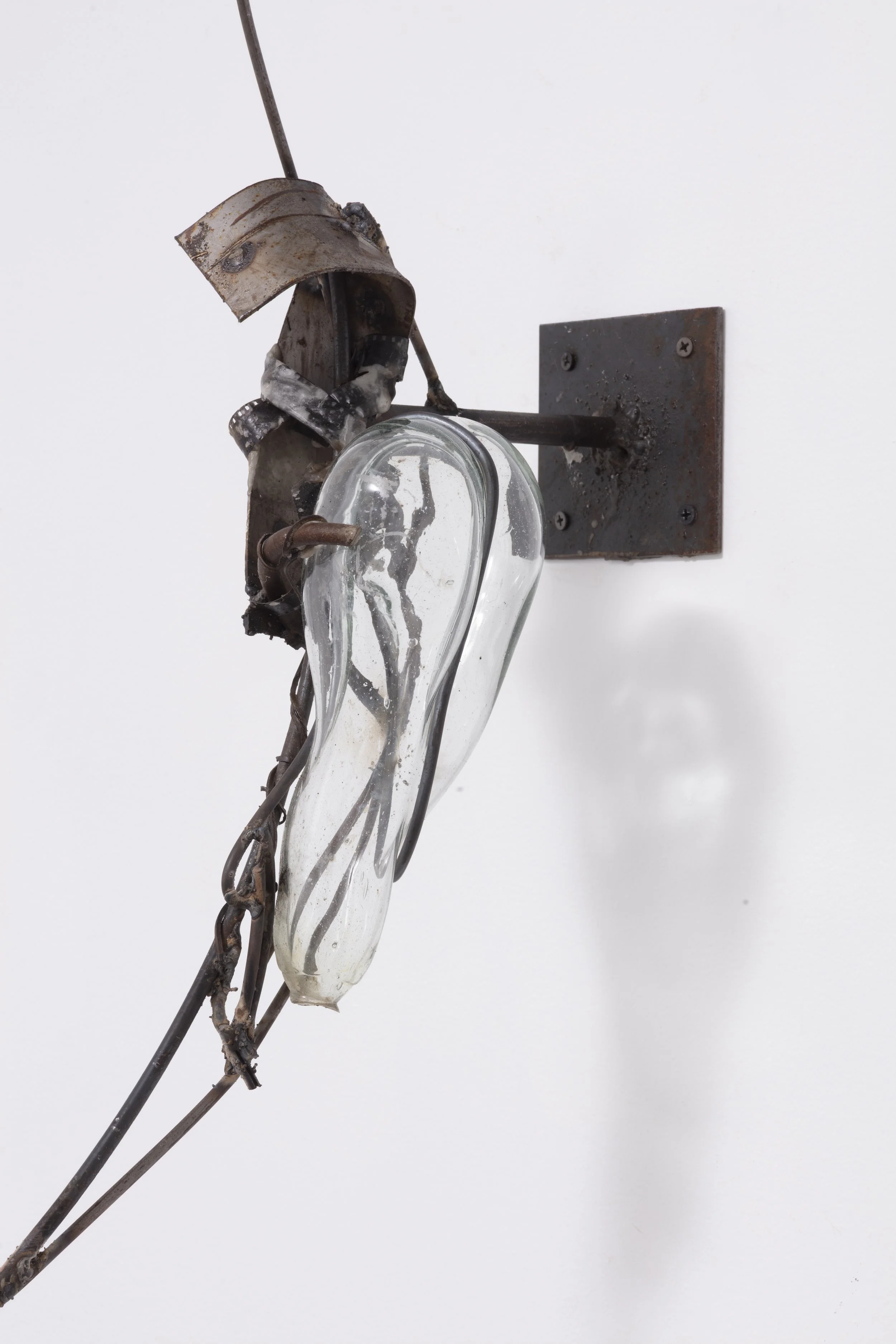
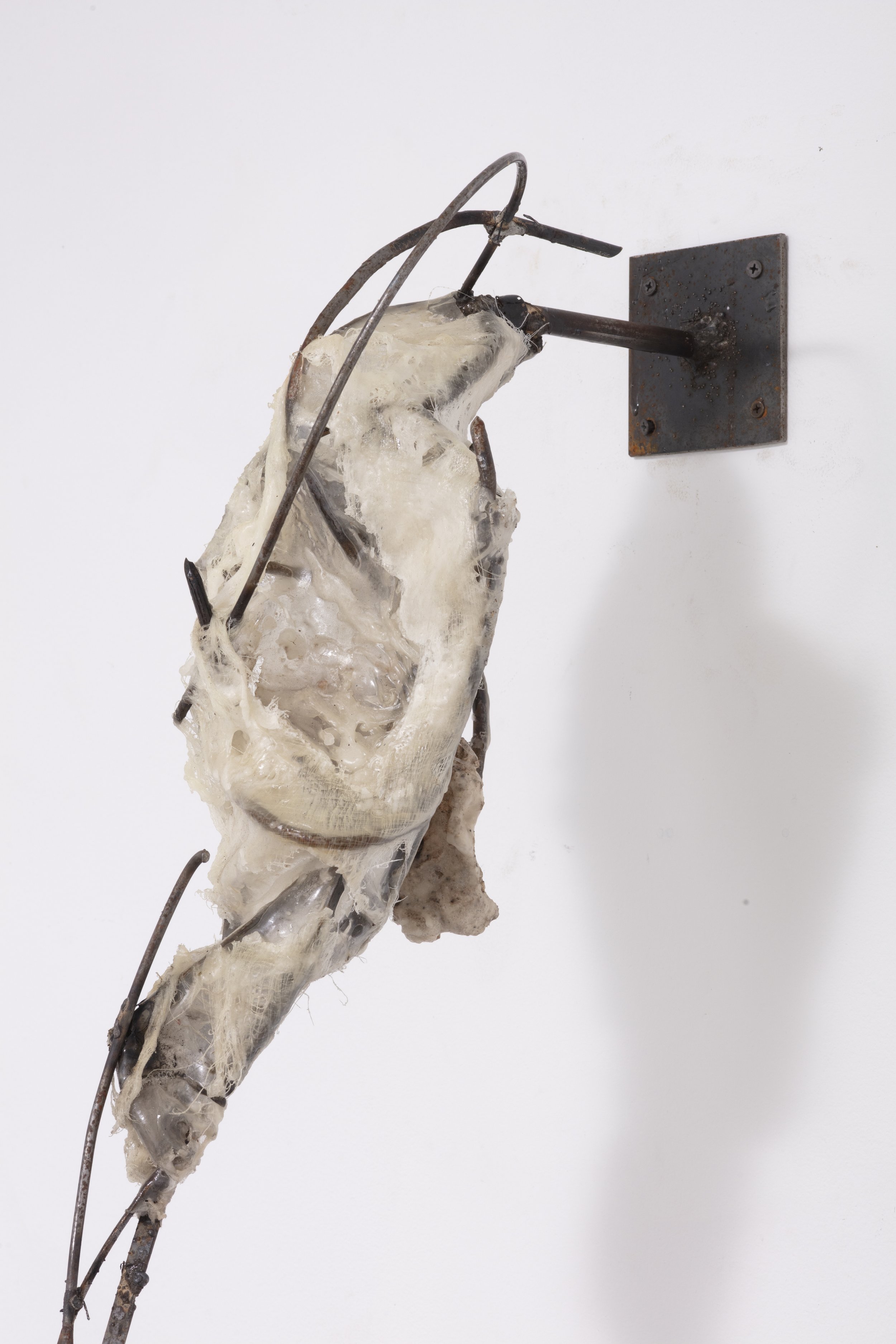
Teach me a new language, 2026
Blown glass, metal, resin, encaustic, oil paint, gauze
46 x 9 x 18 in.
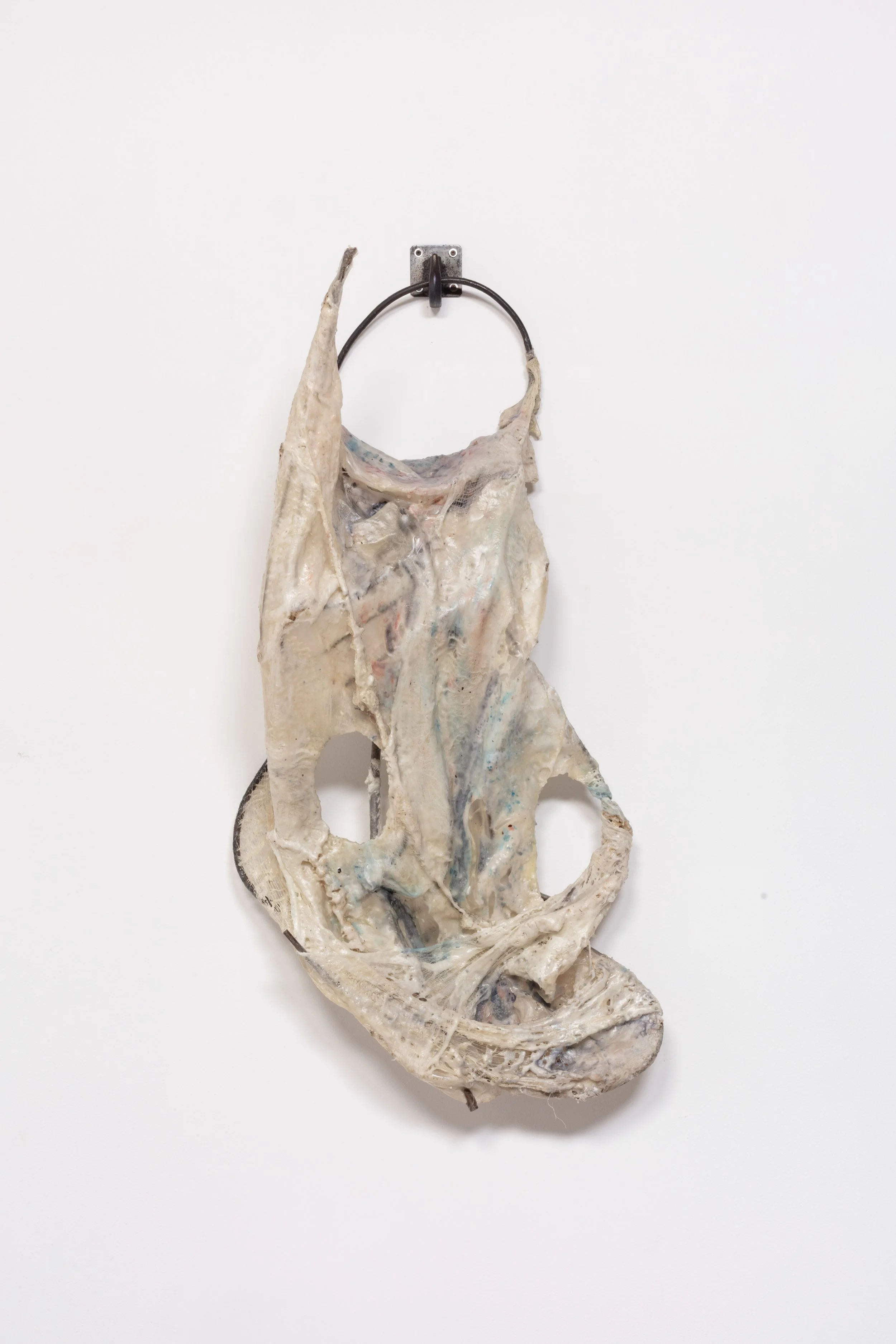
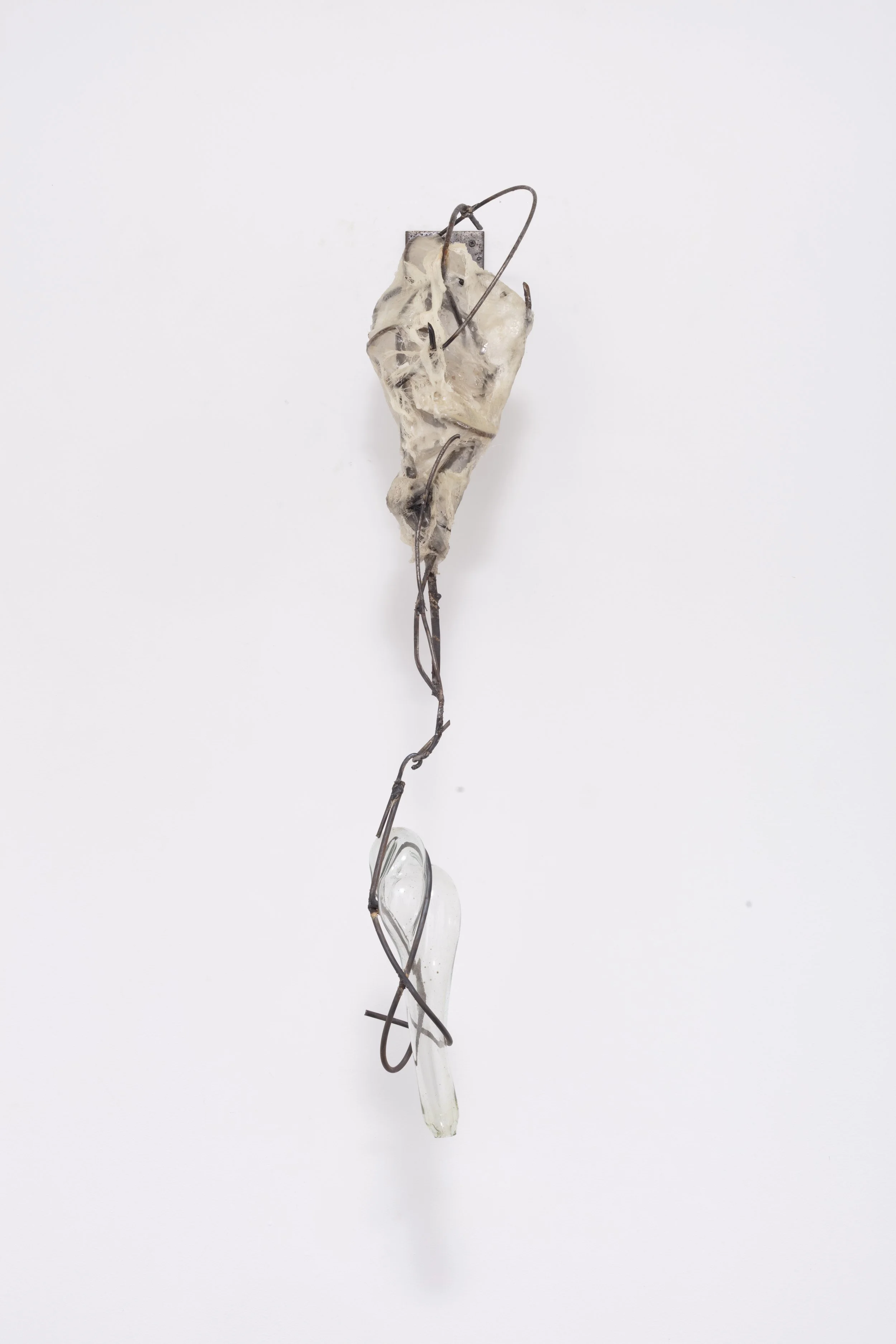
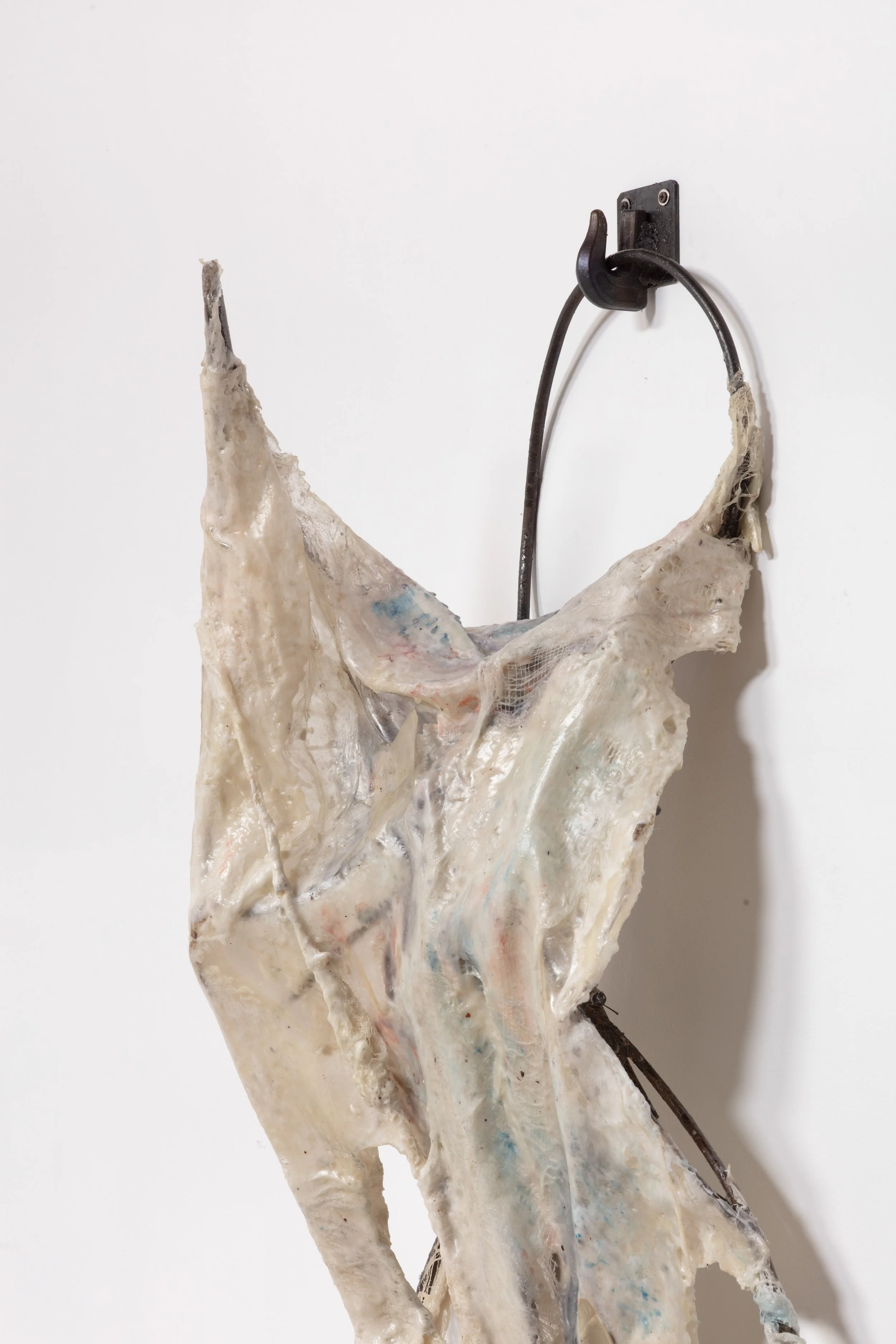
More desires; years are claws, 2026
Metal, resin, encaustic, oil paint, gauze
50 x 24 x 12 in.
This ongoing series investigates the reciprocal relationship between sculpture and film, exploring how the material conditions of cinema might be translated into sculptural form, and how sculpture might, in turn, become a way of thinking through film. Working with steel, resin, encaustic, and blown glass, the works develop translucent structures and fragile surfaces that evoke the optical and material properties of cinematic images. Transparency becomes not merely a visual effect, but a sculptural condition through which light, depth, opacity, and material density are brought into tension.
Rather than treating sculpture as a support for cinematic images, the works approach film as a material and spatial problem. Translucent membranes, suspended fragments, exposed structures, and irregular surfaces evoke the layered composition of a filmstrip, the unstable passage of light through a projector, and the delicate materiality of an image as it emerges, deteriorates, or disappears. The sculptural object becomes a site where the distinctions between image and matter, surface and depth, projection and volume begin to blur. Film is no longer confined to the screen or to the duration of a projection; its properties migrate into the physical organization of the sculpture, while sculptural relations of tension, weight, transparency, and suspension offer alternative ways of thinking about cinematic experience.
Some works draw upon the processes of degradation associated with experimental cinema: the deterioration of film stock, the decomposition of the cinematic apparatus, and the alterations that accumulate through exposure, friction, chemical transformation, and the passage of time. Here, degradation is not simply the loss of an original image or the failure of a technical medium. It becomes a generative process through which new textures, forms, and material relations emerge. The instability of the cinematic image finds a counterpart in the transformation of sculptural surfaces, where translucency gives way to opacity, structures become exposed, and materials retain traces of their own alteration.
Through these exchanges, the series approaches cinema not only as a technology of representation, but as a material process subject to duration, transformation, and decay. The sculptures inhabit an uncertain threshold between the visibility of an image and the physical conditions that make its appearance possible. They ask what remains of cinema when its apparatus begins to disintegrate, when the image loses its legibility, or when the fleeting passage of light becomes a persistent material presence. Rather than preserving the image against time, these works explore how its fragility might generate other forms of existence. Sculpture and film become mutually transformative practices, opening a space in which images acquire material bodies and matter becomes capable of producing cinematic effects.