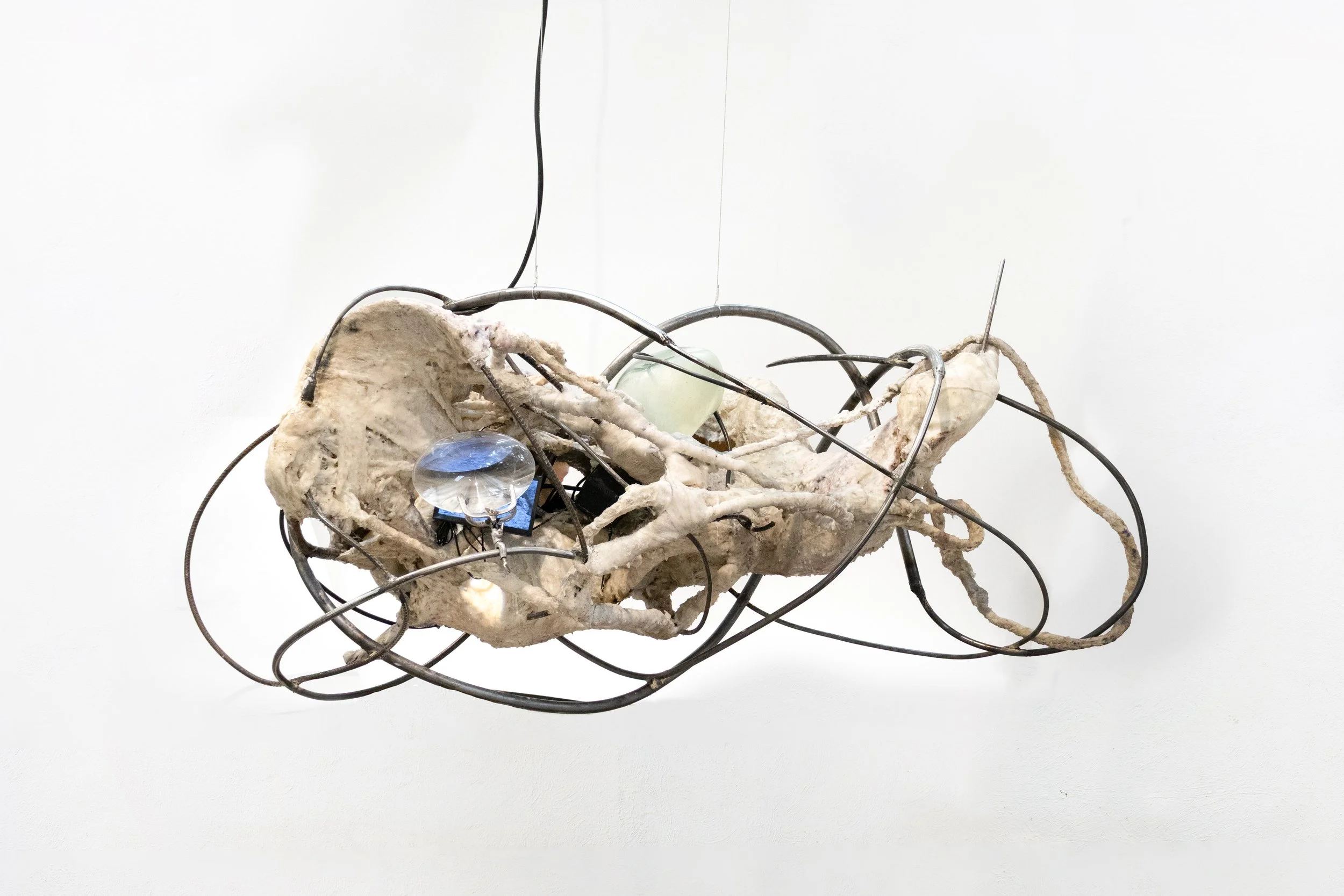
Paisaje interior 1, 2025, Resin, steel, and beeswax sculpture, 68 1/2 x 25 5/8 x 19 3/4 in, 174 x 65 x 50 cm
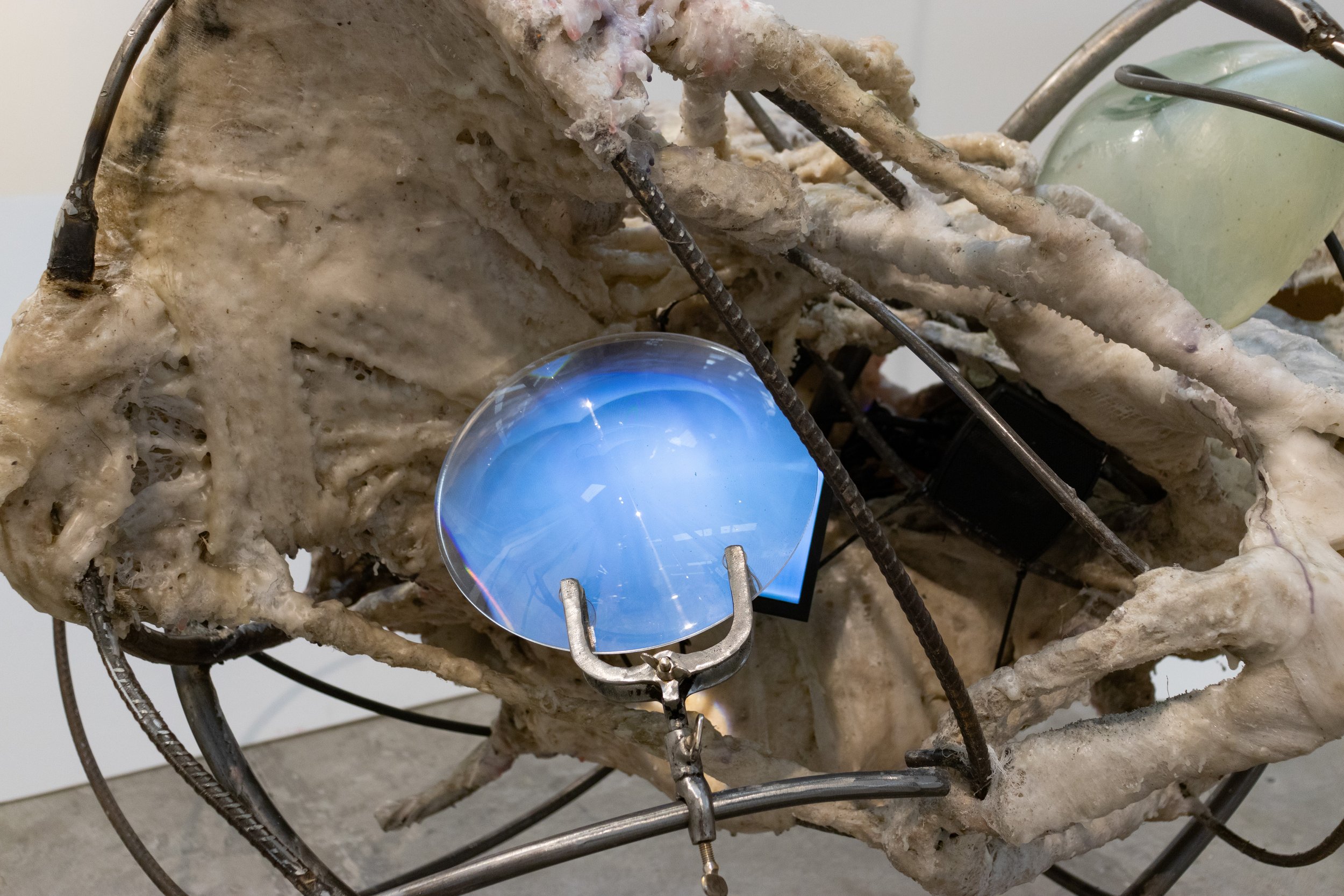
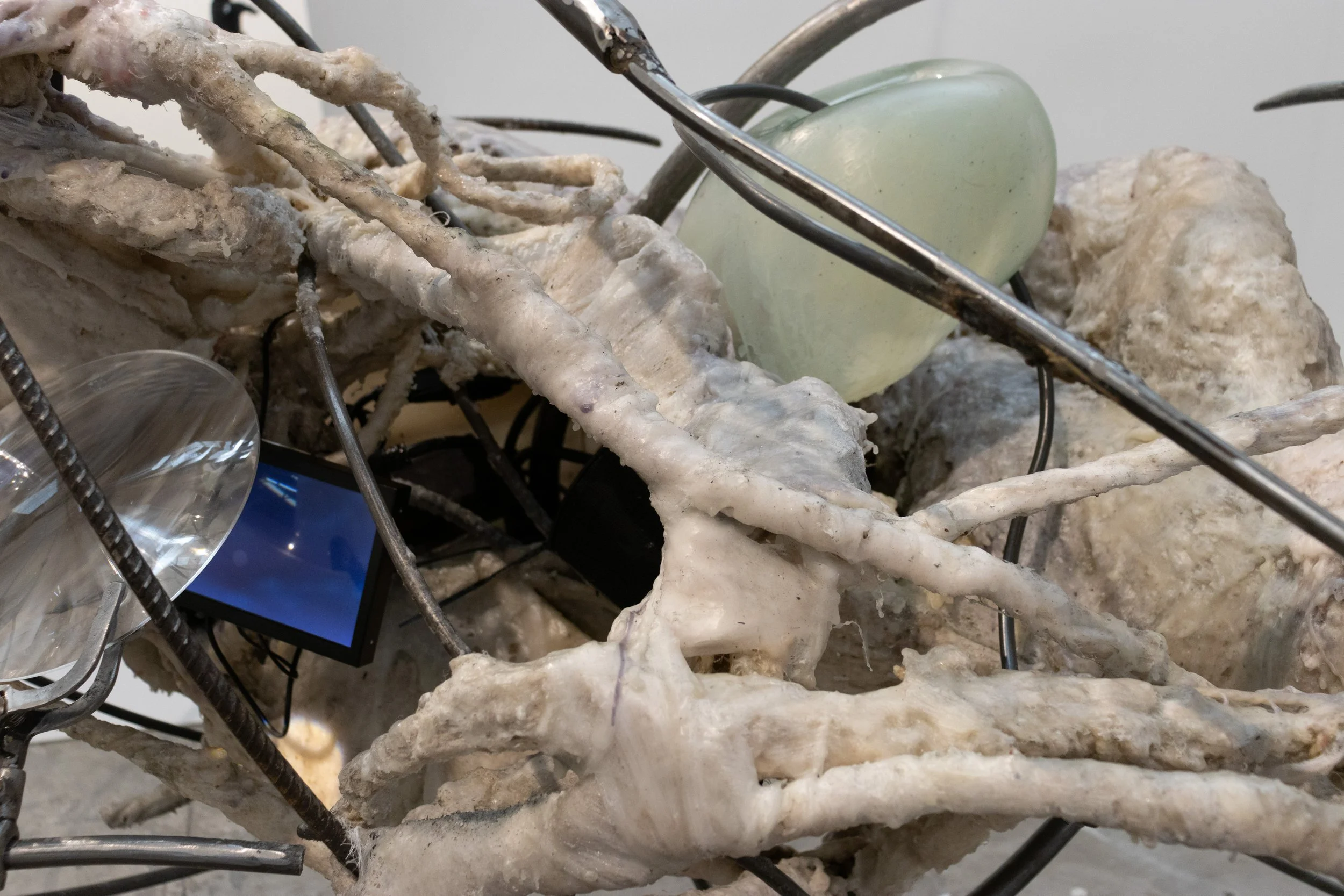
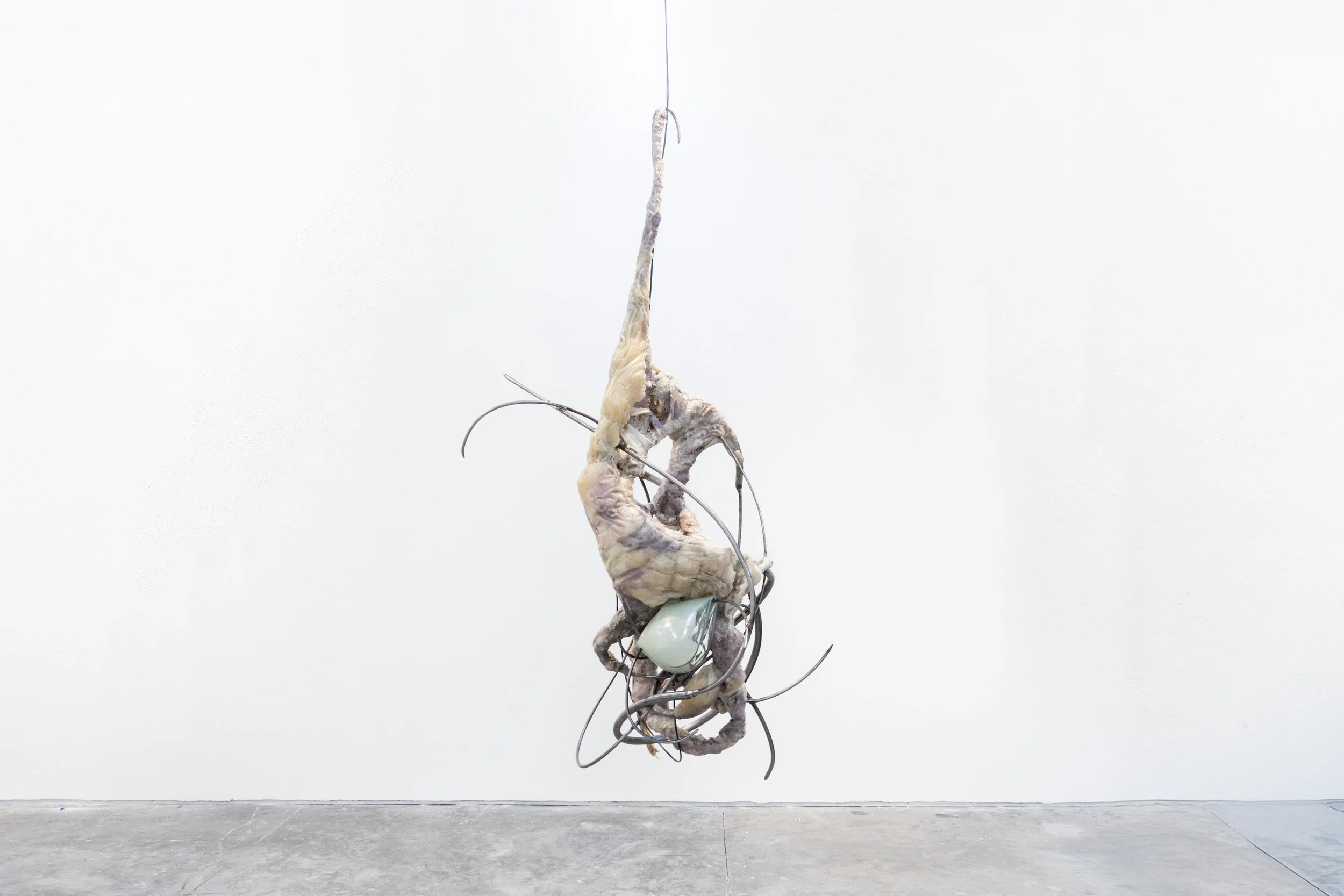
Paisaje interior 2, 2025, Resin, steel, and beeswax sculpture, 89 x 19 3/4 x 19 3/4 in, 226 x 50 x 50 cm
Mixed media
Installation
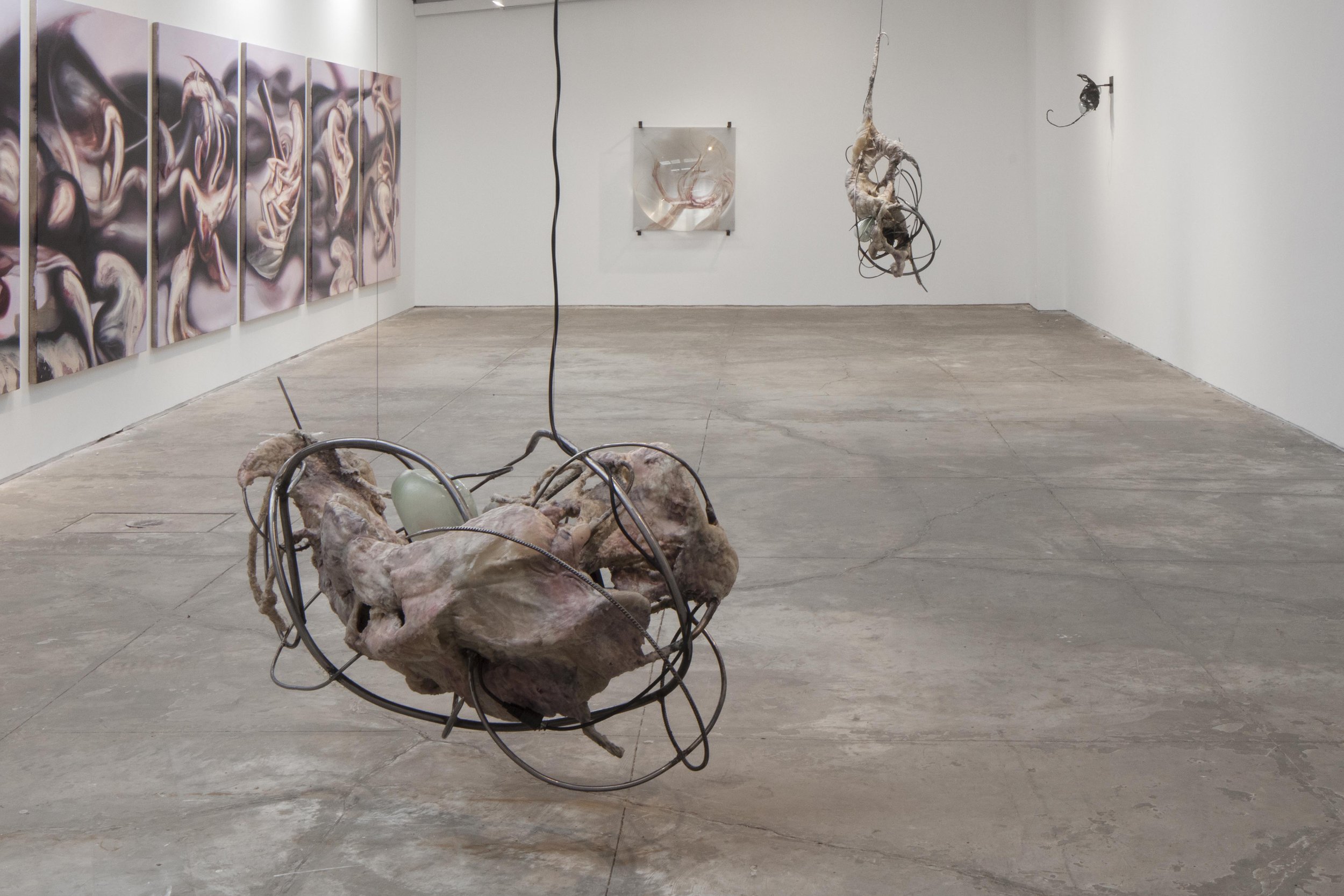
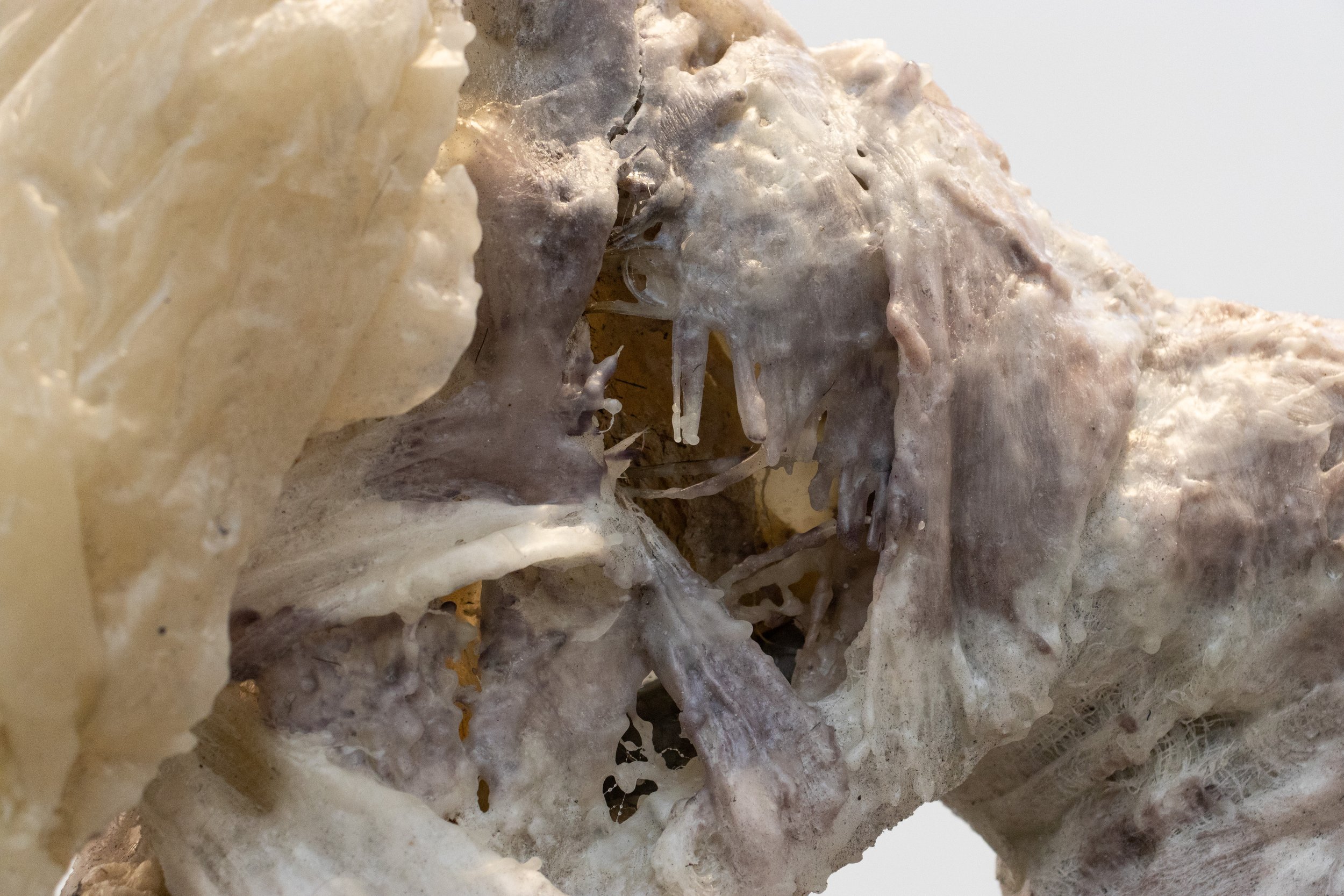
Paisaje interior explores the stratification of heterogeneous temporalities through the interactions of sculptural matter, sound, and moving image. Bringing together resin, steel, and beeswax, the sculptures establish provisional configurations in which materials with different physical properties, histories, and capacities for transformation enter into relations of mutual affectation. Their forms evoke neither a stable organism nor a recognizable landscape, but unstable material assemblages in which geological, biological, and technological processes become entangled. Surfaces resembling skin, mineral formations, and eroded terrain coexist without settling into a single identifiable body or environment.
At the center of the series is an encounter with geological time: a duration that exceeds the limits of human perception and imagination. Beeswax and encaustic introduce a temporality that cannot be reduced to the moment of fabrication or exhibition. Through the gradual transformation of matter, wax evokes processes of mineralization and petrification whose timescales extend far beyond an individual life, potentially spanning centuries or longer. The sculpture thus becomes a provisional stage within a process that neither begins nor ends with the human encounter. Its present form is only one moment in a material history whose future remains largely inaccessible to human experience. Geological time appears here not as an abstract measure, but as a material force that unsettles the privilege of the human present and the assumption that objects exist within the temporal limits of their use, perception, or recognition.
Sound and moving image introduce additional temporal layers that intersect without necessarily synchronizing. They operate as sensorial extensions of the sculptural field, opening onto landscapes and interiors that shift between the macroscopic and the microscopic, the geological and the bodily. Textures of skin, rock, desert terrain, and molecular surfaces become difficult to distinguish, displacing the boundaries between organism and environment, interior and exterior, and the living and the nonliving. Rather than illustrating the sculptures, these images and sounds establish parallel material events: rhythms, vibrations, textures, and durations that enter into contact with the physical presence of the objects while retaining their own temporalities.
The notion of the interior therefore extends beyond the anatomical or psychological. It designates a field of material processes that cannot be fully accessed through vision or contained within the boundaries of an individual body. What appears as an interior may equally be a geological formation, a molecular structure, a landscape folded into itself, or a surface through which multiple temporalities become perceptible without becoming fully intelligible. The works approach the interior not as a hidden essence waiting to be revealed, but as a shifting relation between surfaces, depths, and forces.
Through the interplay of sculpture, sound, and moving image, Paisaje interior proposes a posthuman experience of time in which perception becomes only one among many possible durations. The materials do not simply occupy space or embody an artistic intention; they continue to transform, interact, and exceed the moment in which they are encountered. The series situates the human within these processes without granting it a privileged position, opening onto a world in which matter carries histories and futures that remain irreducible to human scale. What emerges is not a unified landscape, but a multiplicity of overlapping temporalities and material relations whose continuities extend beyond the limits of recognition, representation, and individual experience.