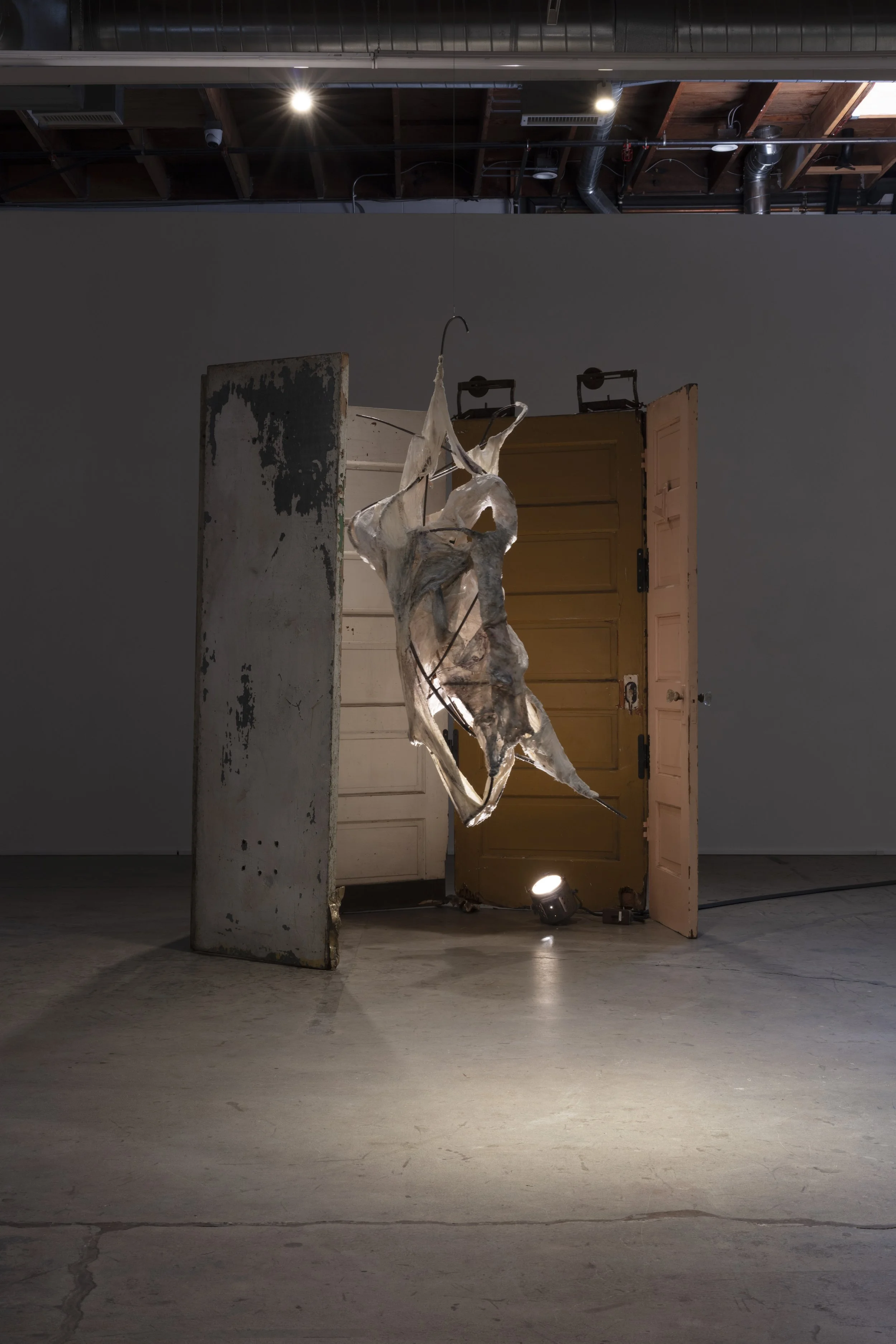
Your shadow at evening rising to meet you, 2026
Metal, resin, bronce, encaustic, oil paint, gauze, found doors
90 x 72 x 60 in.
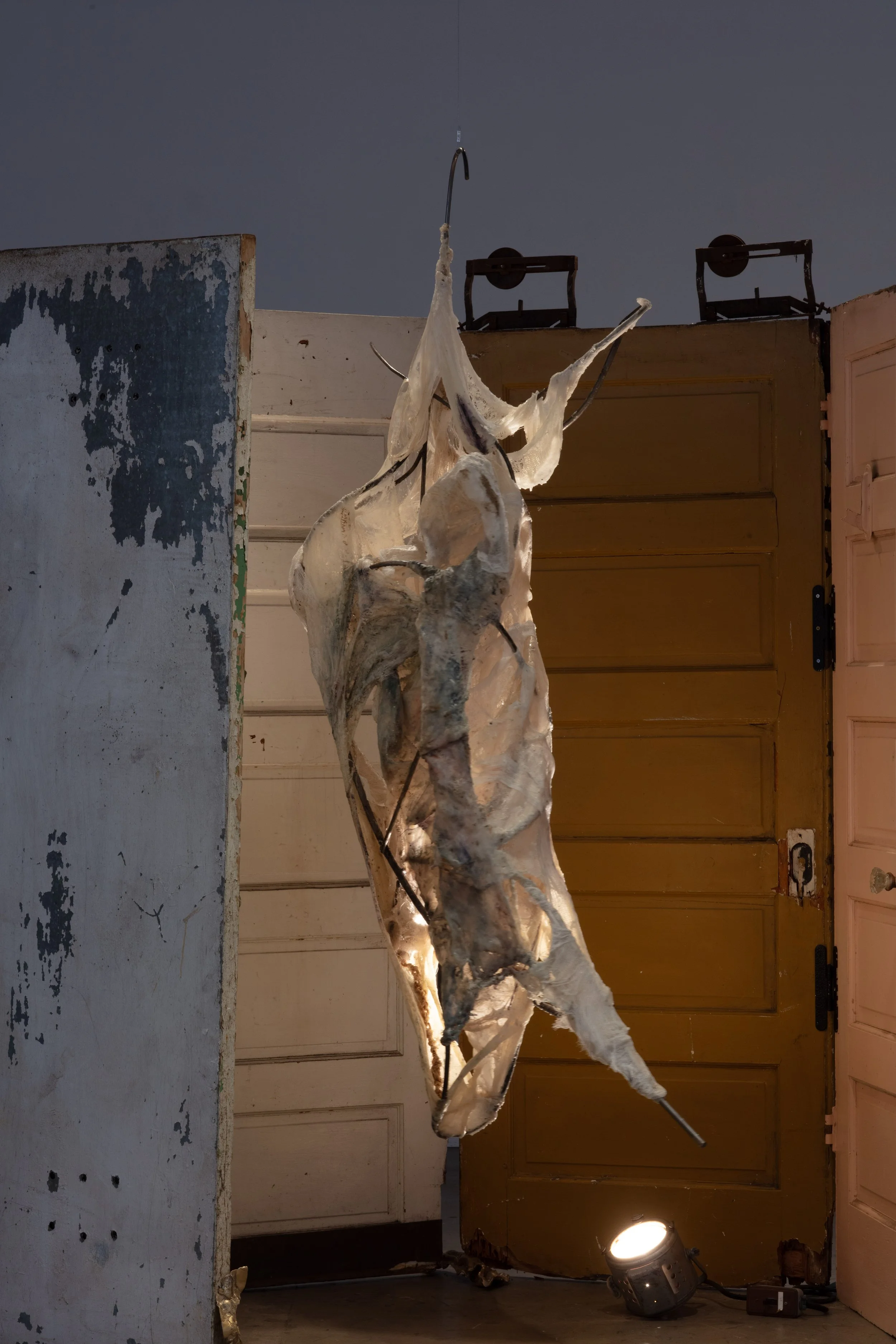
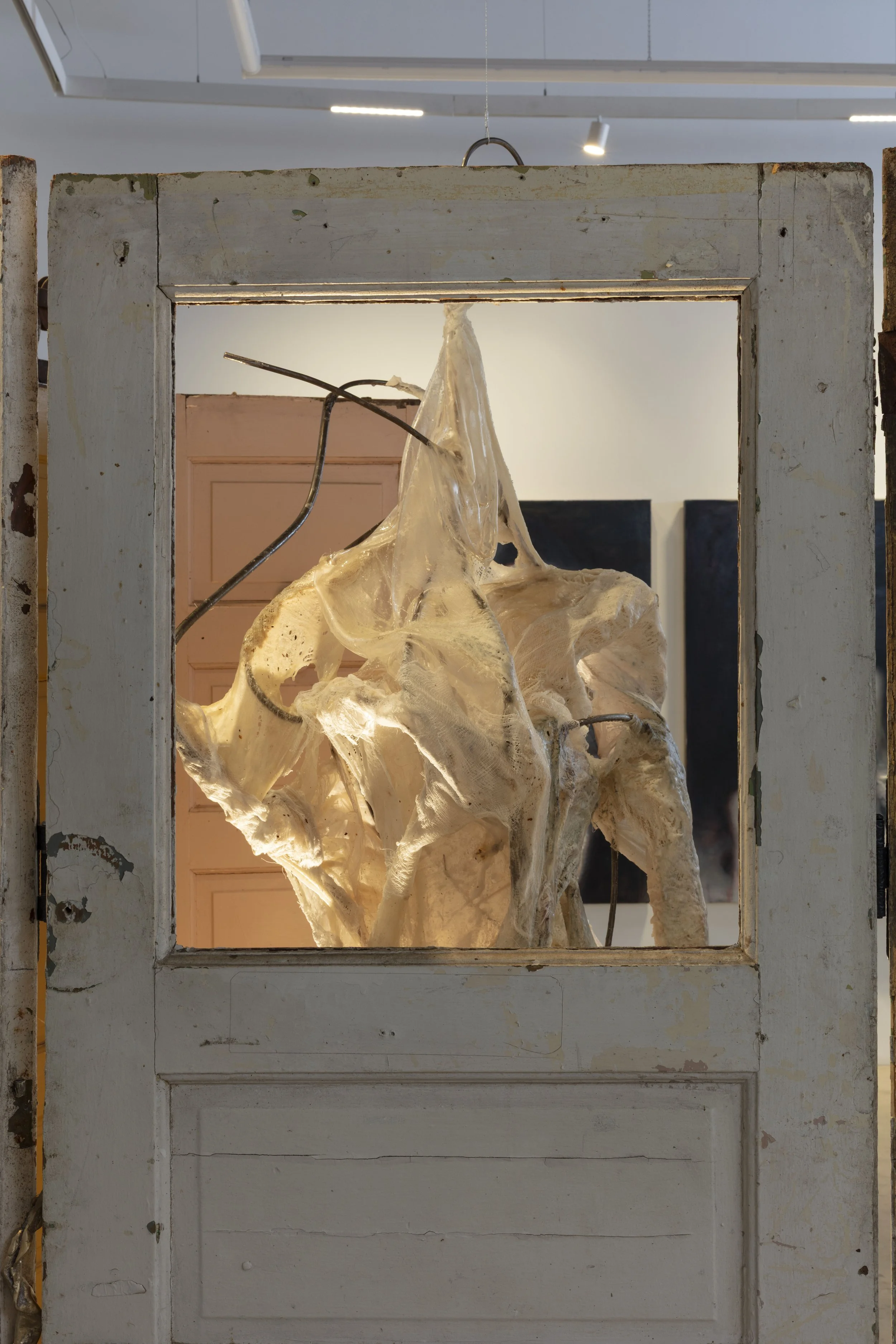
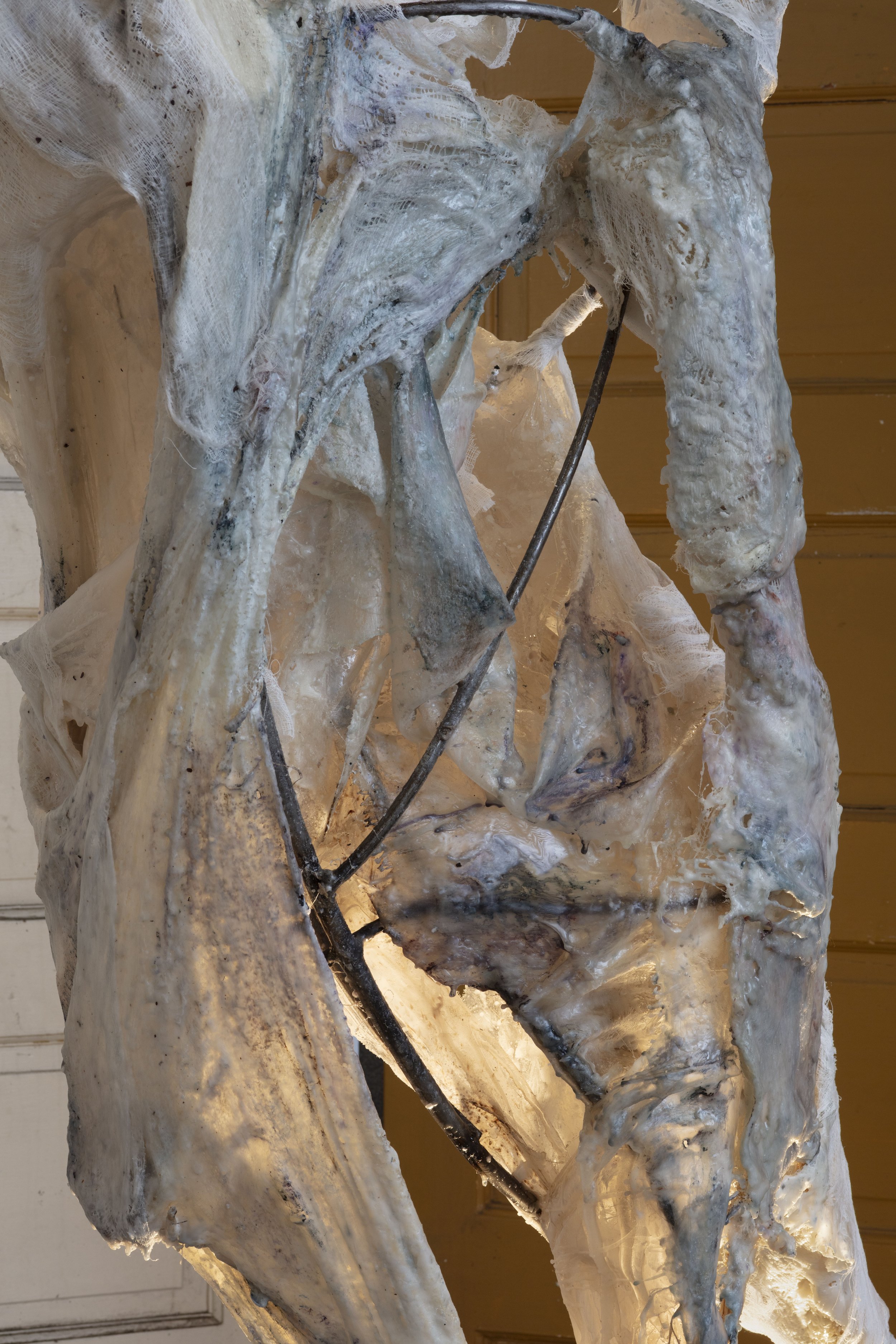
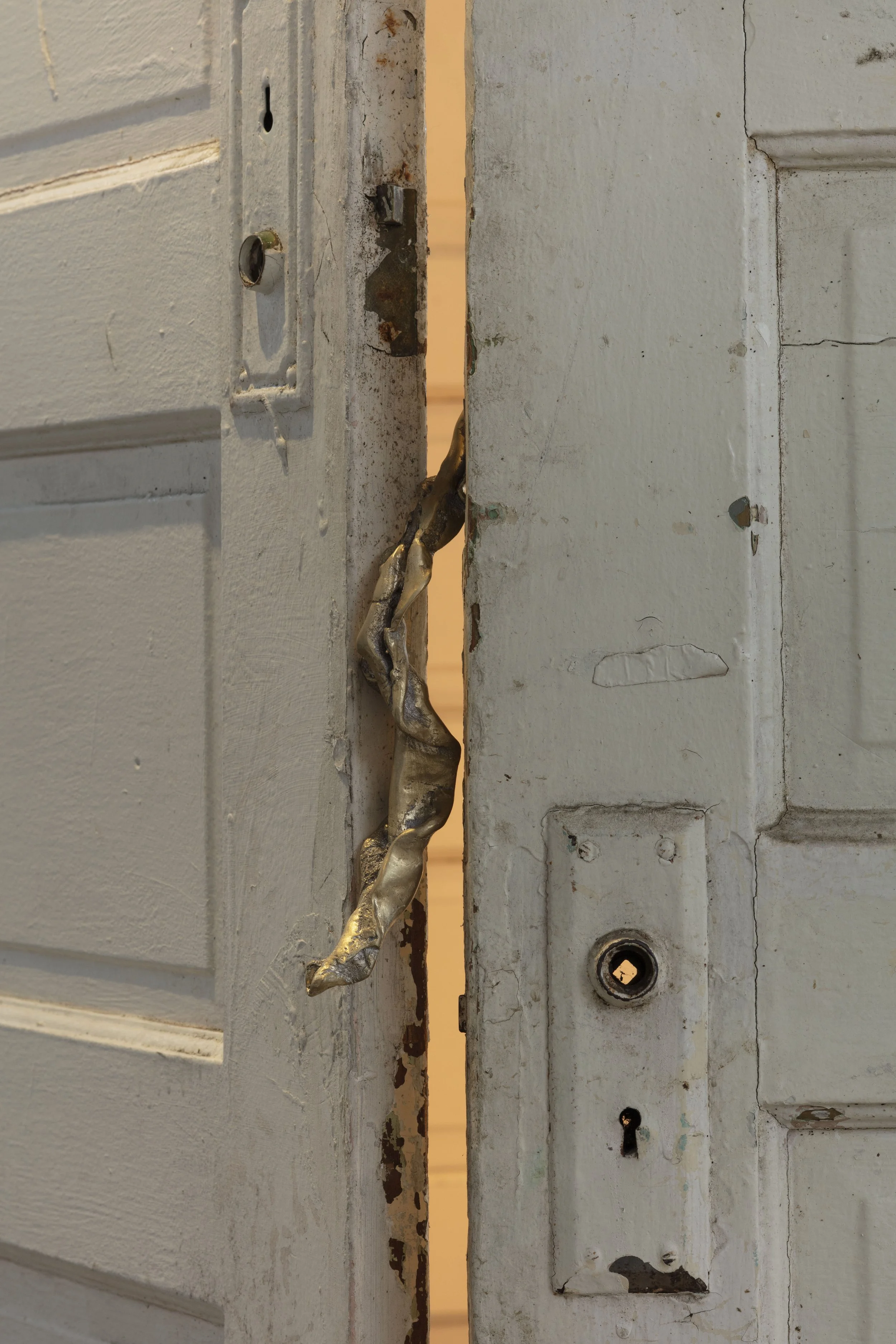
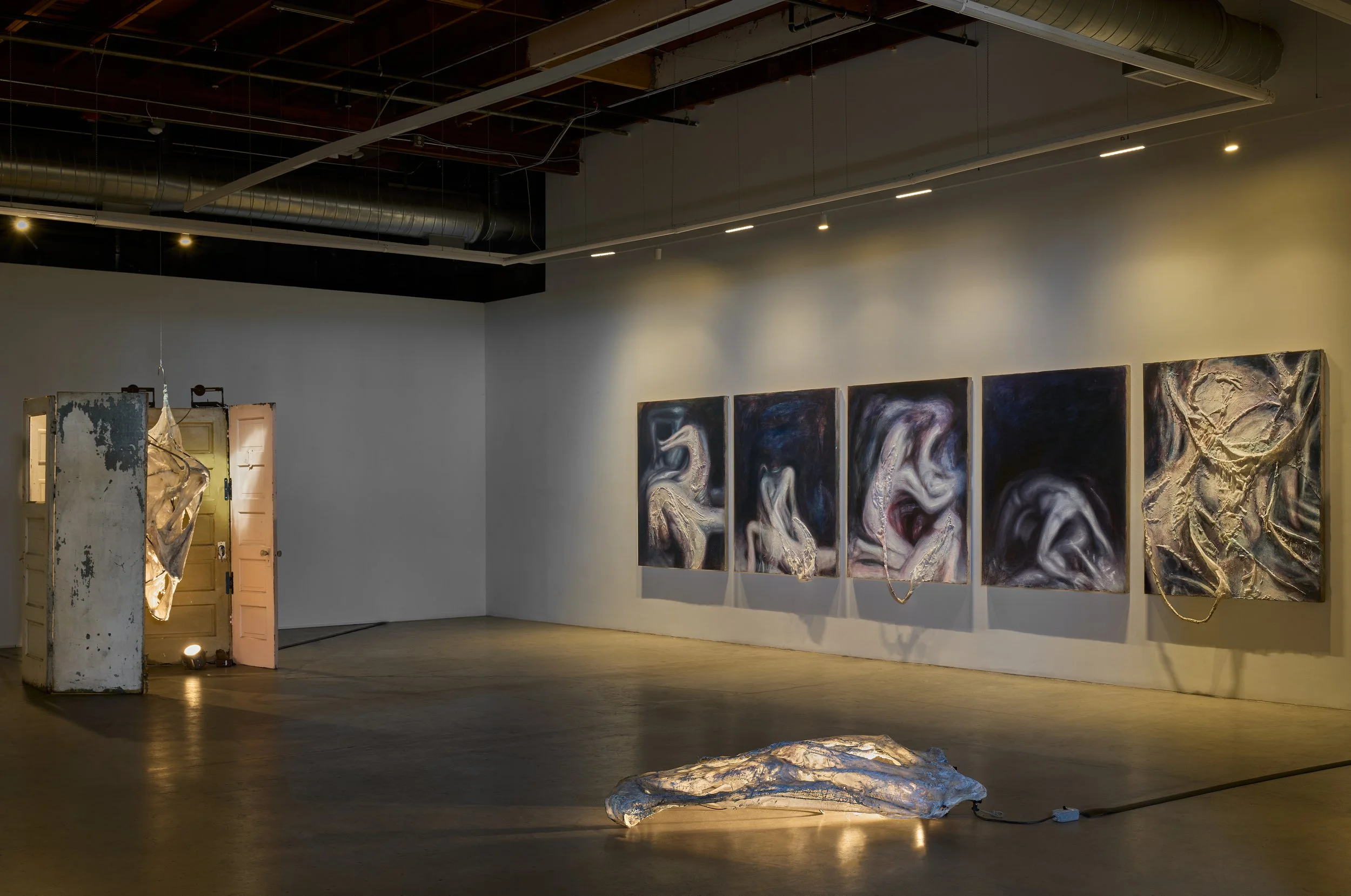
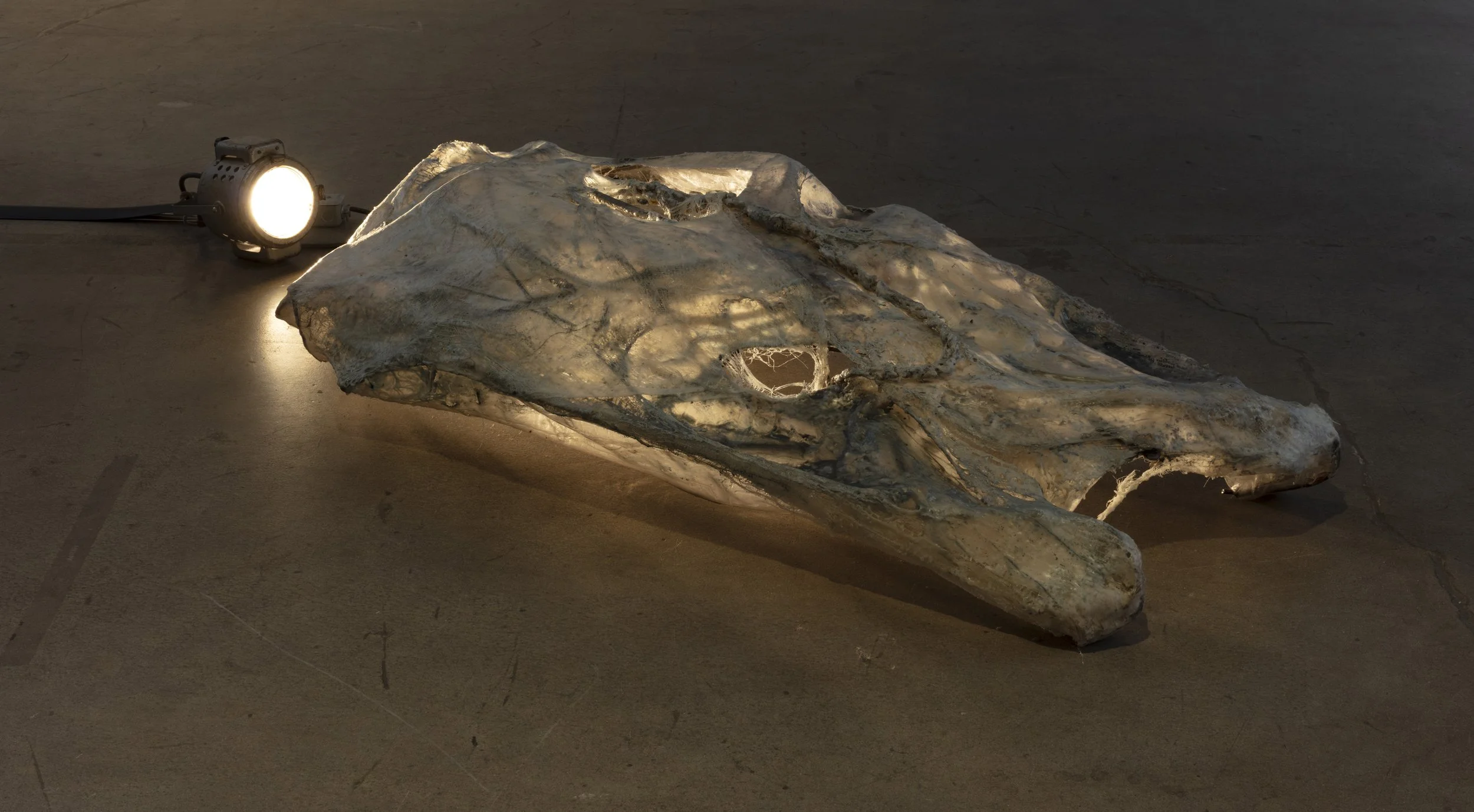
One must be so careful these days, 2026 , Metal, resin, encaustic, oil paint, gauze , 72 x 32 x 13 in.
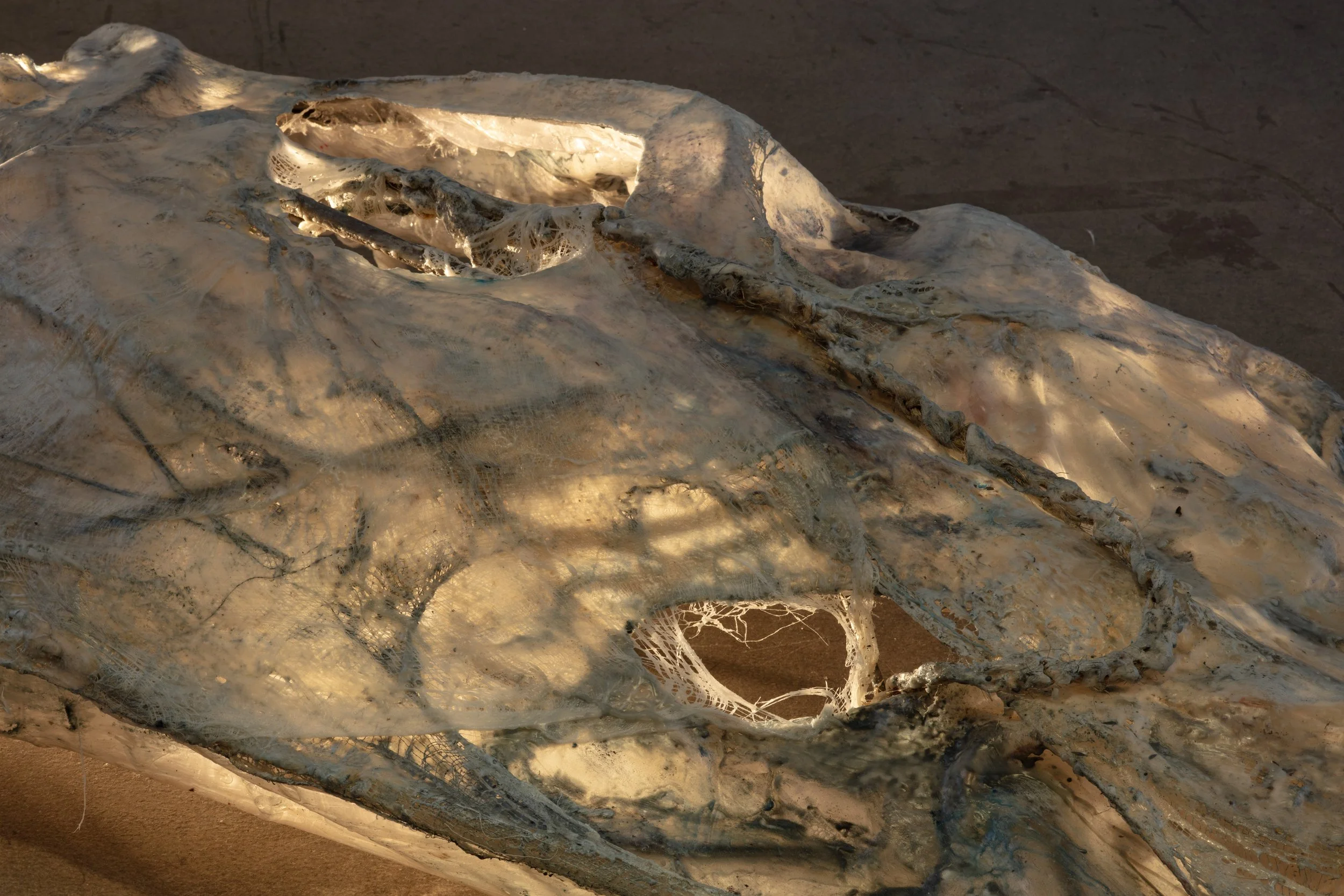
This series explores installation as a space in which heterogeneous temporalities converge, overlap, and collapse. Bringing together recovered doors, cinematic lighting equipment, metal, resin, encaustic, oil paint, and gauze, the works construct provisional environments in which material histories, theatrical arrangements, and ephemeral optical events become entangled. The doors carry traces of previous uses and inhabitation, introducing fragments of domestic and architectural life into the exhibition space. Their familiarity, however, becomes a source of estrangement. Detached from their original functions and repositioned within an ambiguous scenography, these ordinary objects acquire an uncanny presence, hovering between recognition and disorientation, familiarity and alienation.
The uncanny emerges through the transformation of what is ordinarily recognizable into something strangely unfamiliar. Domestic and architectural elements retain the suggestion of an intimate, inhabited world, yet their displacement, partial concealment, and encounter with anomalous sculptural forms unsettle the sense of security associated with familiar environments. Cinematic lighting intensifies this ambiguity, revealing fragments of space while casting others into shadow. What appears familiar becomes difficult to locate or fully comprehend, as though the installation were exposing an obscure dimension of ordinary reality. The resulting atmosphere does not belong entirely to the domestic, the theatrical, or the cinematic, but emerges through their unstable convergence.
Light operates not simply as a means of illuminating the installation, but as a material and temporal force. Its evanescence contrasts with the slower transformations of resin, encaustic, and other sculptural materials, whose surfaces continue to age, discolor, and change beyond the duration of the exhibition. These distinct temporalities coexist without being reconciled: the brief event of illumination encounters materials that persist, deteriorate, and retain traces of their transformation. The installation brings together the transience of cinematic light and the extended durations of material change, making perceptible a tension between what appears momentarily and what continues to transform beyond perception.
The scenographic dimension of the works produces an environment that suggests the possibility of a narrative without establishing a fixed sequence of events. Recovered architectural elements, theatrical illumination, and ambiguous sculptural forms evoke thresholds, encounters, and interrupted passages. Yet these fragments do not resolve into a recognizable setting or a linear story. Instead, they generate an atemporal space in which different historical moments, material durations, and imagined events seem to occupy the same present. The familiar architecture of domestic life becomes a setting for something that cannot be fully identified, as if the installation were staging an encounter with a past that has not entirely disappeared or a presence that has not yet fully emerged.
By entering this space, the viewer encounters a configuration in which the distinction between past and present, permanence and disappearance, familiarity and estrangement becomes unstable. The works bring different temporal scales into proximity: the accumulated history of found materials, the evanescent duration of light, and the ongoing transformation of matter. What emerges is a cinematic form of installation in which narrative is generated through material coexistence rather than chronological progression. The space becomes a temporary convergence of times that cannot be fully synchronized, an environment in which objects, architectural fragments, and sculptural forms acquire an uncanny vitality. Through this encounter, the installation transforms the familiar into something both intimate and unsettling, opening a threshold between recognition and uncertainty, presence and disappearance.